
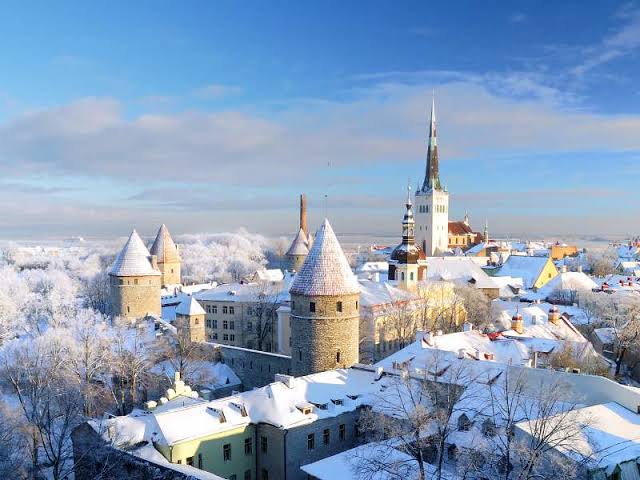
Winter in Europe: Why More Nigerians Are Going in the Cold Months
Europe in summer is the default. Flights are booked months in advance, hotels charge peak rates, and the most iconic spots, the Trevi Fountain, the Eiffel Tower, the canals of Amsterdam, are shared with what feels like half the world. Winter Europe is a different proposition entirely, and a growing number of Nigerian travelers are figuring that out.
This isn’t about tolerating cold weather. It’s about what the cold weather makes possible.
The prices drop significantly. Flights into major European hubs between November and February, outside of the Christmas and New Year window, are some of the cheapest of the year. Hotels follow the same pattern. Cities that charge a premium in July become genuinely affordable in January, which means a longer trip, a better hotel, or both, for the same budget.
The crowds thin out in ways that change the experience. Walking through Prague’s Old Town in December feels nothing like doing it in August. The architecture hits differently when you’re not navigating a sea of selfie sticks. Museums that require timed entry in summer become walkable on the day. Restaurants have tables. The city feels like itself again.
The Christmas market circuit is its own reason to go. Germany, Austria, France, and the Czech Republic run some of the most atmospheric Christmas markets in the world, Strasbourg, Vienna, Nuremberg, Prague. For travelers who have never experienced a European winter market, it’s one of those things that earns its reputation. Mulled wine, handmade crafts, roasted chestnuts, lights strung across medieval squares. It sounds like a postcard and turns out to actually be that.
New Year in Europe is a different kind of celebration. London, Amsterdam, Berlin, and Edinburgh all mark New Year’s Eve in ways that are hard to replicate elsewhere. Edinburgh’s Hogmanay in particular, a multi-day street festival built around the new year, is one of the most underrated celebrations on the continent.
January and February are the hidden window. Once the holiday season clears, Europe empties out and prices fall further. This is the time for cities like Lisbon, Seville, and the south of France, where winter temperatures are mild enough to walk comfortably and the tourist infrastructure is still fully running, just without the tourists.
A few practical notes for Nigerian travelers heading to Europe in winter:
Cold weather gear is not optional. Even mild winter destinations like Lisbon can get sharp and wet. Pack layers, a proper coat, and waterproof shoes, trying to buy these on arrival in Europe is expensive.
Daylight hours are short. Most northern European cities see sunset by 4pm in December and January. Build itineraries that front-load outdoor activities and use evenings for indoor culture, galleries, restaurants, markets.
Schengen visa timelines don’t change with the season. Apply early regardless of when you’re travelling.
Winter Europe rewards the traveler who plans well and goes in with the right expectations. It’s not summer with a coat on, it’s a genuinely different experience, and for many people who’ve done both, it’s the one they prefer.
If winter Europe is on your radar and you want help putting the trip together, routing, visa advisory, timing, BWW is your plug. Start planning your European winter experience with us now.
0 comments